
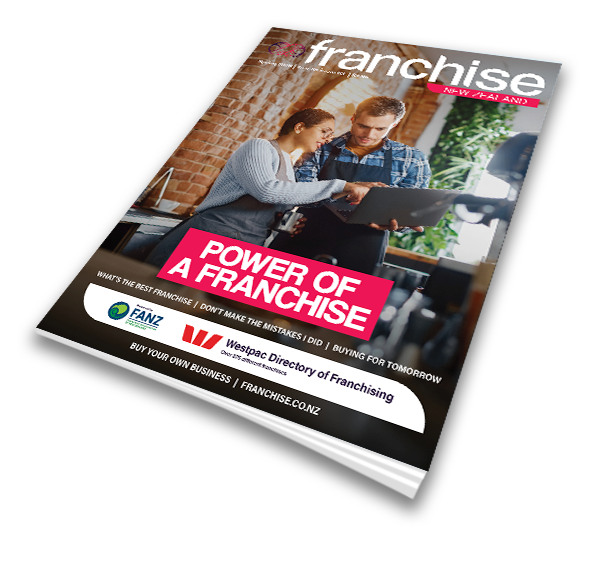
CARVING A NEW NICHE

We take a look at what mindset new generations of franchise buyers need to bring with them, how they are finding their information, and what franchisors can do to make their brands stand out
Just as winter temporarily halts nature’s growth, a recession pauses business expansion. Economic activity shrinks, GDP contracts, and unemployment may rise – but this phase also flushes out inefficiencies, setting the stage for the next spring. As New Zealand exits its latest recessionary cycle, franchising also needs to carve itself out a niche in the face of changing demographics, rapidly developing AI tools and new methods of information gathering.
Franchises also go through cycles – just like all businesses. One major difference between a franchise and an independent business is that franchises are usually granted for a fixed term, often with rights of renewal outlined in the franchise agreement. A franchise business should be able to provide a liveable owner’s salary or drawings and a solid Return on Investment (ROI), ideally within the period of the initial term.
At the end of the franchise business cycle comes the expected profit upon sale of the business. And this is where things get interesting for today’s prospective franchise buyers. Whether you are looking at a brand new ‘greenfields’ business, or an existing business up for resale, franchise buyers in New Zealand seem to be bucking one demographic trend – by getting younger as well as older.
In this issue we feature young franchisees like Ryan Dickins of Kitchen Studio, who focused on finding a franchise for his first business venture because of the proven systems and support. Also featured is 24-year-old franchisee Reuben Cutts from Pit Stop, one of a growing number of younger people looking to a franchise to help them fulfil their ambitions.
Franchisee couples Camilo and Marilen Melmel of Black & White Coffee Cartel and Sophie and James Laird of Liquorland have all found balancing the demands of a new business with young family life much easier with the structured support of a franchise system behind them.
Shifting demographics
In New Zealand, most of the focus on current demographic changes is looking at our ageing population and the ethnic transitions brought about by immigration. On page 35, Geotech Information Services explains how consumer behaviours are changing, but that is not the only effect of demographic shifts on franchising. There is a lack of hard data in this area, but anecdotally, more franchises are being bought by people outside the 35-55 age band.
Nathan Bonney of Iridium Partners, experienced franchise recruitment and development professionals, says that they are fielding interest from more buyers in their late fifties and older. “They are usually well capitalised, looking for really solid franchise options, and of course often have the sort of life experiences that will really stand them in good stead as franchisees.”
Across the Tasman, the recent Franchising Expo in Sydney reportedly attracted a surge of interest from younger buyers – it will be interesting to see if the same trend is followed in Auckland in September amongst attendees at New Zealand’s own Franchise & Small Business Expo.
And an ABC Business Market Intelligence Report released in April this year found that 64% of sellers over the past 12 months were over 46 years old, while 87% of buyers were under 55. The report revealed other important demographic changes, with 67% of sellers being NZ European and 44% of new buyers coming from Asian, Indian, and other ethnic backgrounds.
Traditionally, franchises have been purchased most often by people in their late thirties to early fifties – largely because people at this stage of their lives have usually had enough time to build the equity that will enable them to fund a business purchase. But, with houses proving more expensive to buy, relative to income, it could be a franchise business that actively helps younger people onto the property ladder these days, as V.I.P. franchisee Khushali Patel can testify (see page 19).
There are also plenty of instances in this magazine where younger buyers have found innovative ways to raise funding – pooling resources with family members or friends, exiting franchisees who are prepared to leave equity in the business for a while, or even entering into a joint venture with the franchisor. As Daniel Cloete of Westpac says on page 9, the transition from employment into business ownership can be more achievable when lenders are able to see consistent systems, reliable trading performance and evidence of strong franchisor support.
And alongside the larger franchise systems and well-known brands, there is growing interest in flexible, lifestyle-driven businesses, signalling a broader shift to people reassessing not just incomes, but also how and where they want to work.
Ownership mindset
In business as in life, change is constant. First time franchisees need to move swiftly from an employee mindset to an ownership mindset to be able to keep up. One of the biggest challenges for business owners is how and when to respond to changing circumstances such as success, economic upheaval, personal circumstances, new competitors or other factors. When should you expand? When should you consolidate? When should you upgrade? When should you outsource? Where are the opportunities? What are the threats? How does each of these changes affect your long-term goals and exit plans?
These are questions that come up all the time. As an independent business owner, you have to make all these decisions by yourself, using information from a sample size of one. But as a franchisee, you can draw on the experience of tens, maybe hundreds of other franchisees throughout New Zealand and even overseas to help you decide what action to take and when.
One of the things experienced franchise accountants and lawyers will ask you to do as you assess a business for purchase, is to think about your plans for exiting the business. Of course, as you start off enthusiastically in business, the end of the road is not what you tend to focus on most – but starting off in the ownership mindset means working towards long-term goals and understanding how every action you take along the way is going to affect the end game.
Doug Downer, author of the book Invested: how to be successful as a franchisee, explains, “If you become a franchisee, you must take ownership of the performance and outcomes of your business. The franchisor has given you the tools, so you must put them to work, and the success of your franchise business is 100% on you. If you approach franchising with this mindset, then you have a greater chance of success.”
Changing buyer behaviour
Franchisors are also coping with change in their own business of running a franchise system, as well as supporting franchisees through the changes their businesses face. If the franchise is in growth mode, recruiting for new franchisees, it is important for franchisors to focus on what is different for prospective franchisees today – what has changed for them and how can franchisors better support new buyers’ needs?
Young and not-so-young, most people today are hugely influenced by what they encounter as they move around their daily experiences in the internet environment. But, finding ways to cut through the “noise” of that environment is only getting harder, the more time people spend in it. Where once it would have been common to have your brand or business seen three times – perhaps once online, once in a newspaper or magazine, and once on the side of a vehicle in your neighbourhood – before someone took action to find out more about your business, that before-action encounter rate is probably closer to 20 times today.
Buyers are also used to being able to instantly access information to help them in making decisions. Meredith Taylor, co-founder of Iridium Partners, says that franchisors must ensure that any online content about their brands is relevant and useful to prospective buyers, who will be collecting their information from a wide variety of sources. “In return,” she points out, “franchisors should also be finding different ways to gather information about prospective franchisees. It is not enough these days to rely on a directed pipeline of enquiry – they just don’t work.
“Younger people especially are more likely to be suspicious if you look like you are hiding anything, and they want a lot more information before they are willing to engage in the first place. The more information that is available upfront online, the faster the trust is built. They may also be using non-traceable browsers so that franchisors can no longer rely on remarketing tools to follow up with interested parties.”
Nathan Bonney says with the use of AI increasing at an extremely rapid rate amongst researchers of all age groups, a franchisor’s own website and listings in directories like the one at franchise.co.nz should be kept up-to-date with as much content as can be provided, so that AI tools such as ChatGPT and Claude can more easily discover and verify the relevant information for prospective buyers.
Franchise New Zealand’s own latest data sets tell an interesting story. While the market feels tight as we gently pull out of economic recession, more magazines are being requested, and franchise buyer intent is concentrating and becoming more serious. People are returning, comparing options, and actively researching franchise opportunities.
As the business environment races to catch up with the changes being brought about by AI information research tools, prospective buyers may need to be patient with franchises that are still making their way there, but franchisors will also need to concentrate investment into providing content that really meets the informational needs of the new generations of buyers.
last updated 22/09/2026
last updated 22/09/2026
Featured Listings
Speed Queen Laundry Systems
Enjoy semi‑passive income with your own Speed Queen self‑serve laundromat. With our expert support you’ll be operating a profitable business in no time,...

Paramount Services
A Paramount Services franchise is a safe and affordable way to own your own business. When you become a franchisee we will provide you with enough...

Quinovic Property Management
NZ’s preferred national residential property management service since 1988. Build a profitable and highly scalable business with a steady, secure income...

Katsubi
Your chance to be a part of one of the most successful New Zealand local hospitality franchises. With more than 20 years of experience in the food chain...

Jani-King
Jani-King is known as the world's number one commercial cleaning franchise company providing full operational sales administration support for...

